

The Theatre
Inside a hidden corner of the building site.
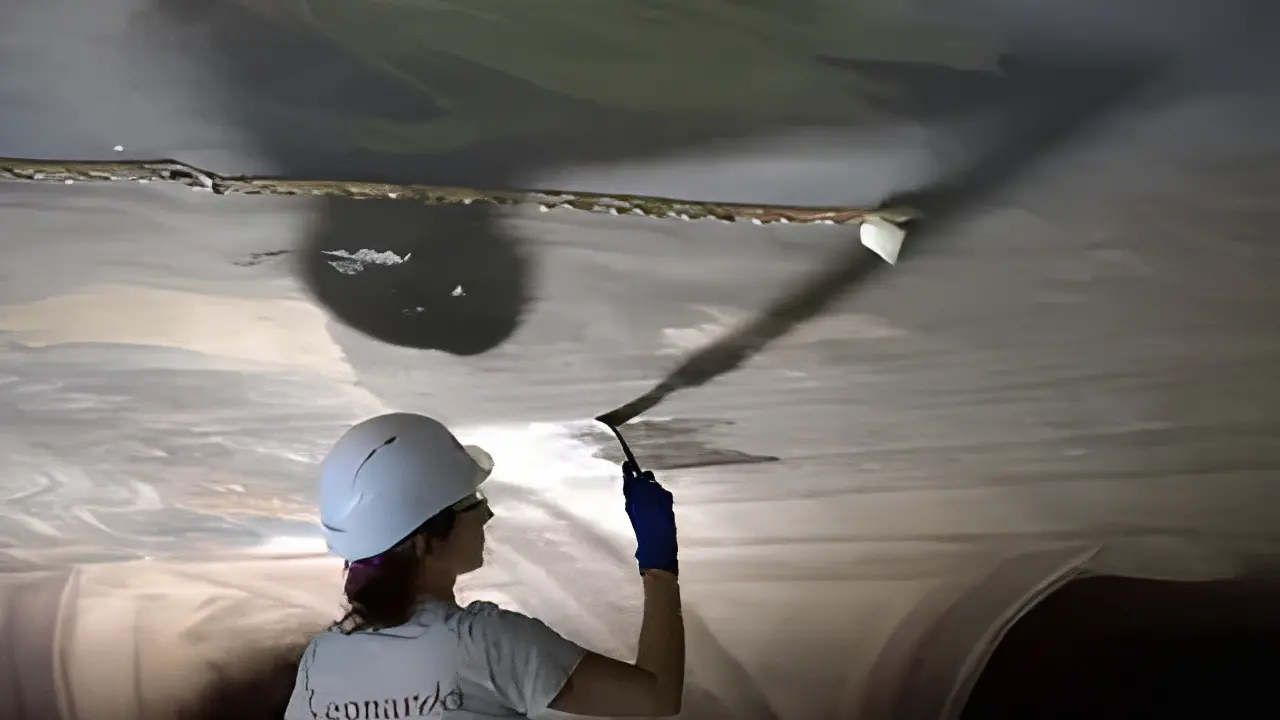
Inside a hidden corner of the building site.
Photographs by Ivano Adversi
There is a place in Teatro Comunale di Bologna that the public never sees: it lies above the vault of the Sala Bibiena. With 198 days to go to the reopening on 14 February 2027, that is where the heart of the site beats. On the scaffolding built up against the ceiling works Adele Galetti, site director for Leonardo, the firm carrying out the restoration: «We are on the ceiling scaffolding and the restoration of the wall paintings is under way. Behind me are the restorers at work». The ceiling of the hall is a delicate and surprising machine: a structure of wooden ribs supporting a reed lattice, finished with gypsum mortars and a lime-putty skim, over which run the paintings, executed in lime with tempera finishes. This is the great decorative page repainted during the nineteenth century, first by Giuseppe Badiali and then, between 1863 and 1866, by Luigi Busi and Luigi Samoggia, with the allegorical figures arranged radially that audiences at the Comunale know and admire as they look up at the great vault of the hall. Before touching those surfaces, however, comes a phase of close study on the part of the restorers: «To be able to do the work there is one fundamental moment, and that is the analyses: we need them to understand the nature of the work and to calibrate the later operations, such as the cleaning and even the retouching», Galetti says. The project calls for an accurate mapping of the decay and targeted investigations — on site and in the laboratory — to read the different phases of execution and the restorations of the past.
The tools used are the very delicate ones the project prescribes: cleaning mainly dry, with soft-bristle brushes and special sponges for deposits of dust and particulate, and compresses with rigid gels where the alterations left by old pictorial interventions have to be removed. The team is now concentrating on the cleaning, «which for us is the most critical moment but also the most important, because it lets us work on different levels: a selective cleaning, aimed above all at making the decoration readable». A good cleaning, Galetti explains, keeps the later retouching to a minimum and achieves «an even, readable result in the decoration, which before the work was all somewhat blackened». In the site director’s words there is also a sense of responsibility that goes beyond the scaffolding and the work itself: «For us this project is certainly a challenge and a source of pride. We are glad to be able to contribute, through our work, to giving the Theatre back: a place that is symbolic and important for the city».
More news
All news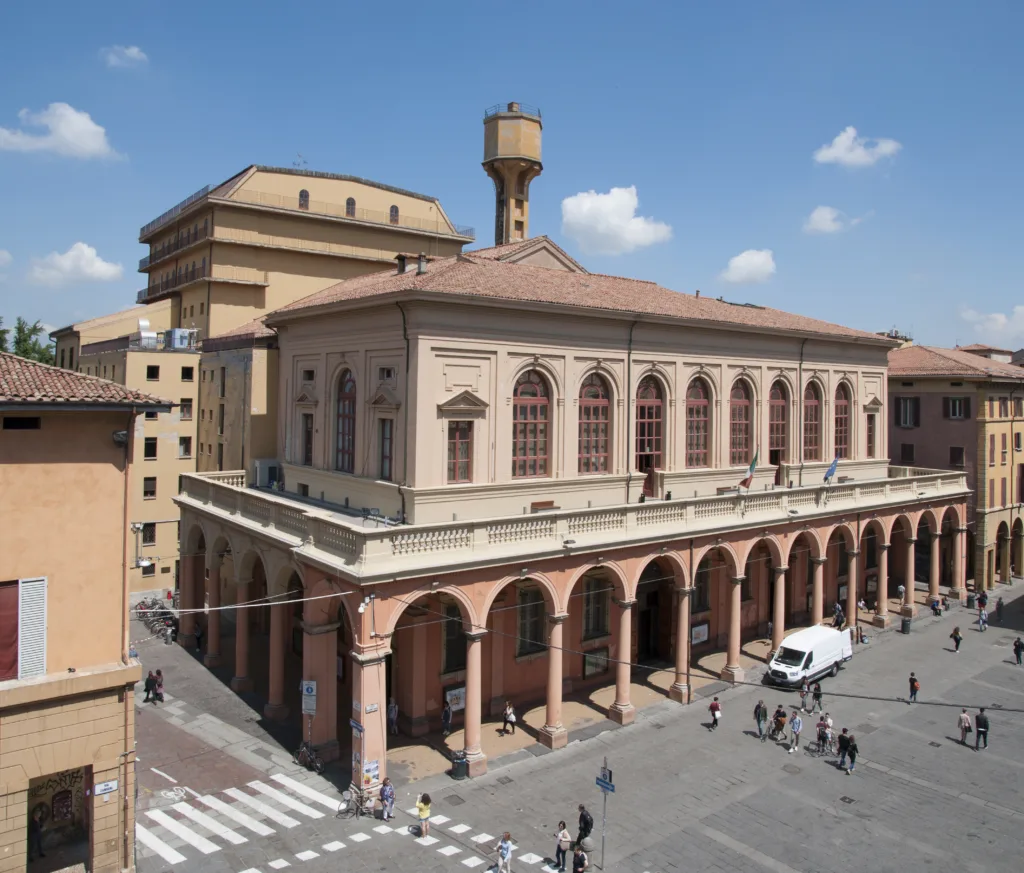
Teatro Comunale reopens: on 14 February 2027 the Sala Bibiena welcomes audiences back
After the restoration works, a day of celebration with Daniele Gatti on the podium and a month of events across the city. On 2 March the Opera Season opens with Il ritorno di Ulisse in patria
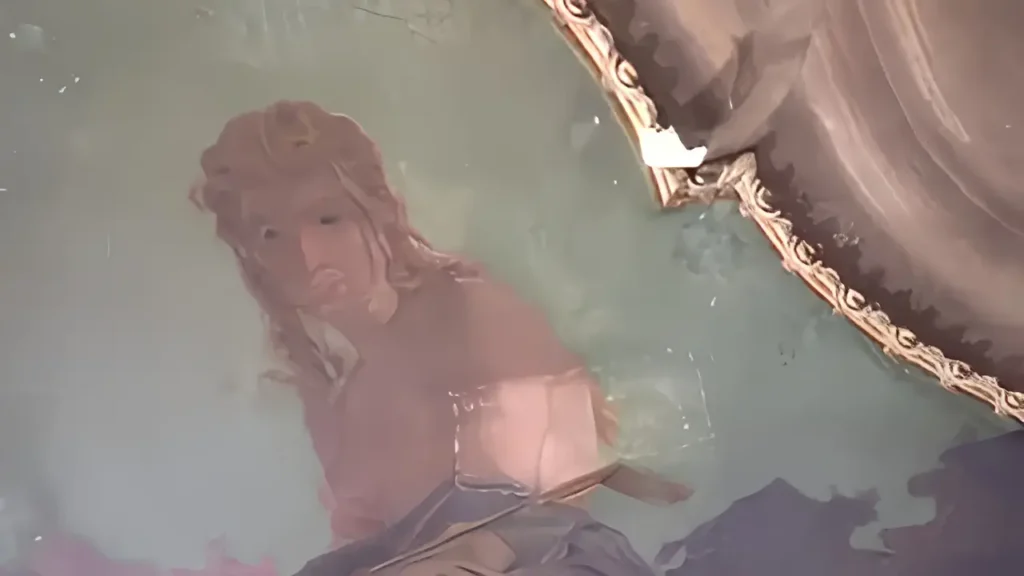
Where the restoration of the Comunale is measured in centimetres.
On the scaffolding beneath the ceiling of Teatro Comunale di Bologna, even the labels on the jars tell a story. “Raw umber”, “burnt sienna”, they read: pigments with old names, sitting beside swabs and mixtures prepared on the spot. This is the domain of Phyllis Novara, site manager for Leonardo
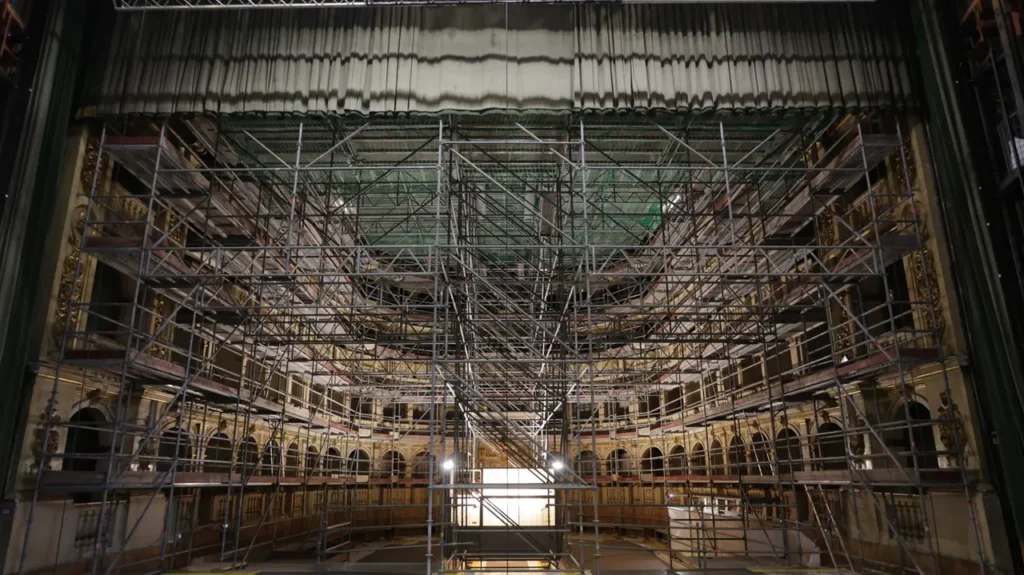
«A historic theatre never stops living». Restorer Bevilacqua on the Comunale’s building site
212 days to 14 February 2027, the date on which Teatro Comunale di Bologna will open its doors again. On the scaffolding that fills the Sala Bibiena today, the conservation and maintenance of the surfaces advances centimetre by centimetre, led by Fabio Bevilacqua, conservator of cultural heritage and operations director of the works, who drew up the project together with the architect Francesco Dalmastri.