

The Theatre
«A historic theatre never stops living». Restorer Bevilacqua on the Comunale’s building site
«A historic theatre never stops living». Restorer Bevilacqua on the Comunale’s building site
Photographs by Ivano Adversi
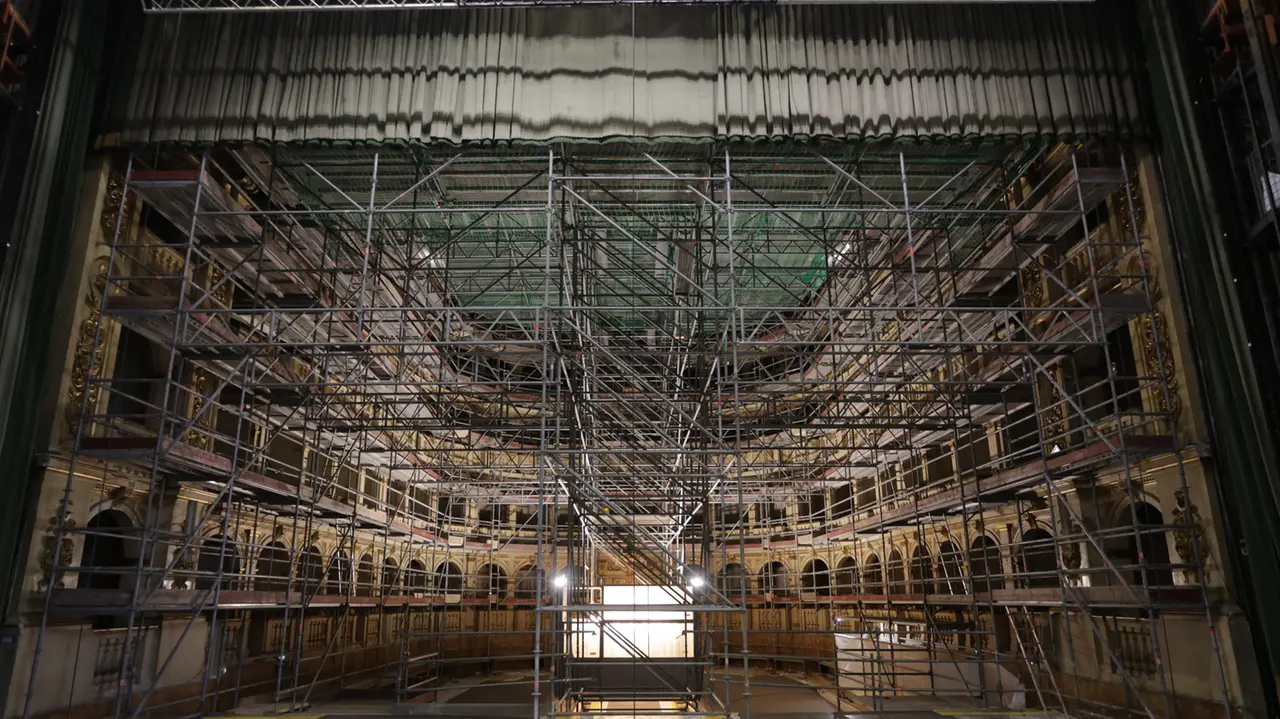
212 days to 14 February 2027, the date on which Teatro Comunale di Bologna will open its doors again. On the scaffolding that fills the Sala Bibiena today, the conservation and maintenance of the surfaces advances centimetre by centimetre, led by Fabio Bevilacqua, conservator of cultural heritage and operations director of the works, who drew up the project together with the architect Francesco Dalmastri.
«A theatre is fundamentally a place that is lived in — Bevilacqua explains —: people inhabit it, they use it. And use is bound up with the damage the surfaces suffer». Forty-six years of performances, of audiences, of lights and sets have left their mark on the finishes that came out of the great building site of 1980-81, when the theatre — declared unusable because of serious structural problems — was consolidated and made safe. The urgency of the moment meant that many conservation and decorative works had to be postponed: on the nineteenth-century ceiling, for instance, the work was limited to a general cleaning and the filling of detachments, deferring a thorough restoration that was never carried out. That season did leave a precious legacy, though: the documentation of the execution techniques and of the recipes for the historic finishes, a body of knowledge that today proves crucial in defining the method and the approach of the new restoration.
«The project is tied to maintenance work that sets out to resolve the conservation problems of the surfaces — Bevilacqua continues —. Here we have both painted surfaces and stucco surfaces finished with gilding». At the centre of it is the ceiling: «It is the part that carries the figurative information, that gives the general sense of the decorative scheme». Cleaning away dust, sediment and the successive interventions of the past will give the painted ceiling back its depth and legibility: «There will certainly be a change in colour». Nothing drastic, however: the guiding principle of the project is not to chase a hypothetical eighteenth-century face for the hall, but to recognise the value of its layered image, built up over two and a half centuries of works and transformations.
In the end, Bevilacqua’s gaze goes beyond the scaffolding: «I believe the restoration will renew the city of Bologna’s “own” monument and give it back». From his words it is clear that to restore is to take care of something that belongs to everyone. The Comunale is closed, but a historic theatre never stops living, not even when it stands still
More news
All news
Teatro Comunale reopens: on 14 February 2027 the Sala Bibiena welcomes audiences back
After the restoration works, a day of celebration with Daniele Gatti on the podium and a month of events across the city. On 2 March the Opera Season opens with Il ritorno di Ulisse in patria
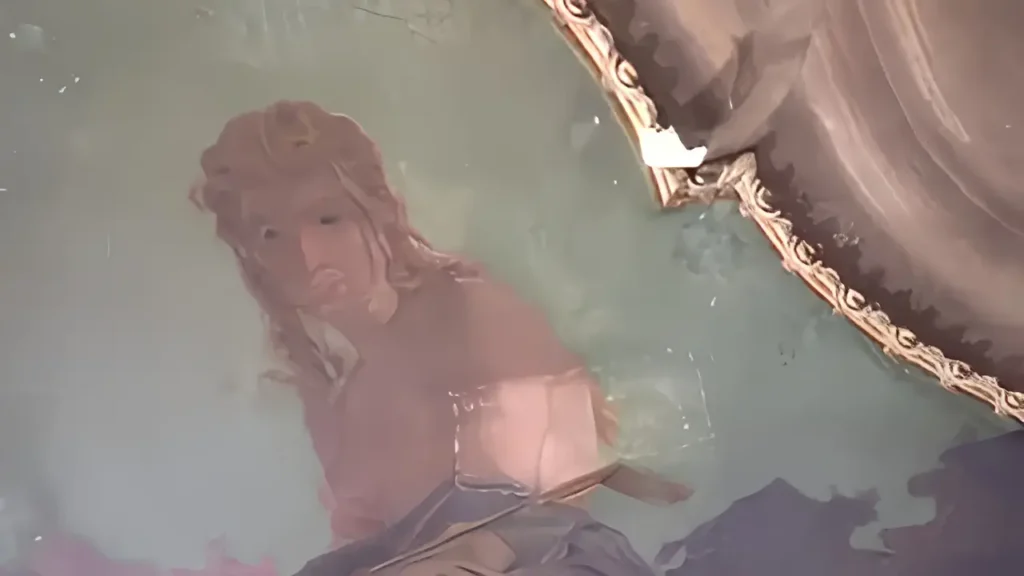
Where the restoration of the Comunale is measured in centimetres.
On the scaffolding beneath the ceiling of Teatro Comunale di Bologna, even the labels on the jars tell a story. “Raw umber”, “burnt sienna”, they read: pigments with old names, sitting beside swabs and mixtures prepared on the spot. This is the domain of Phyllis Novara, site manager for Leonardo
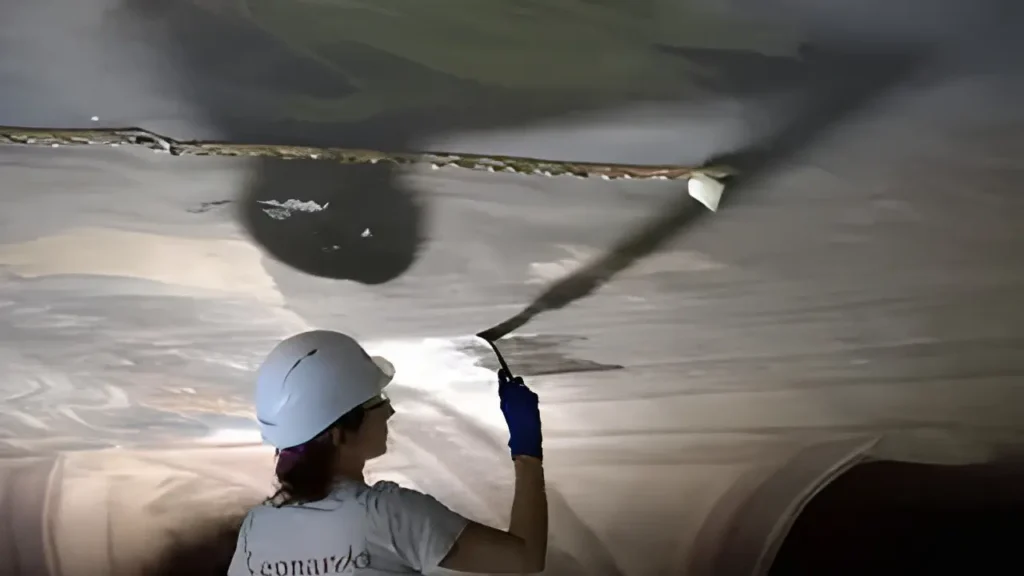
Inside a hidden corner of the building site.
There is a place in Teatro Comunale di Bologna that the public never sees: it lies above the vault of the Sala Bibiena. With 198 days to go to the reopening on 14 February 2027, that is where the heart of the site beats. On the scaffolding built up against the ceiling works Adele Galetti, site director for Leonardo, the firm carrying out the restoration: «We are on the ceiling scaffolding and the restoration of the wall paintings is under way. Behind me are the restorers at work».