

Concerts
Sauer
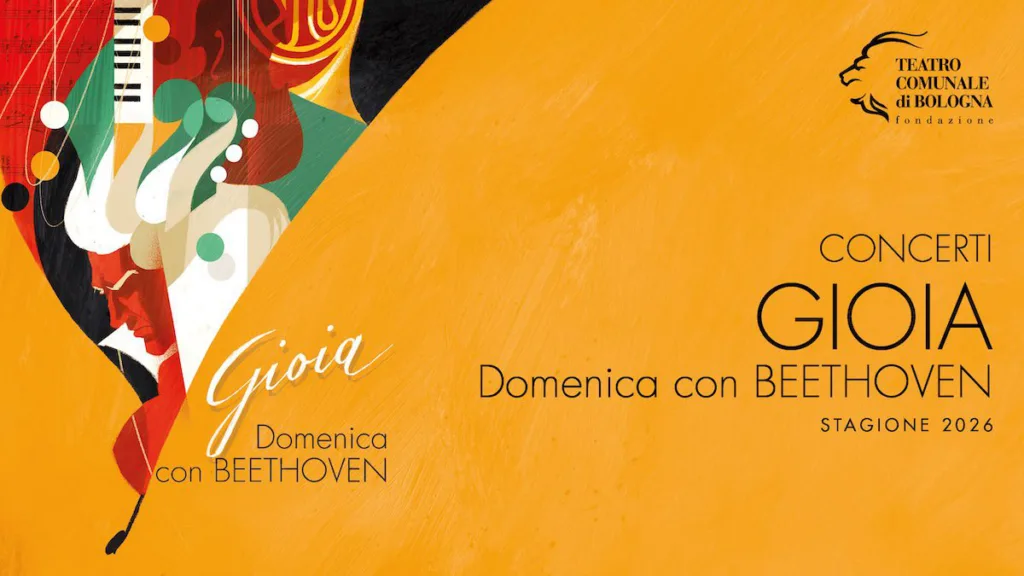
Domenica con Beethoven
December 2026
Programme
-
Egmont: Ouverture in fa minore op. 84
by Ludwig van Beethoven
The overture, among the most famous of the nineteenth century, is almost always played as a concert piece in its own right. In fact Egmont is also incidental music, followed by nine independent pieces for solo voice, speaker and orchestra, admired by Hoffmann and by Goethe. The subject of this 1810 work is the heroic death of the Count of Egmont, who sacrificed his life to show his attachment to his Dutch homeland during the repression carried out by the ruthless Duke of Alba in 1568 on behalf of Philip II of Spain. The overture distils his tragic arc in one of the most dramatic and intense pages of Beethoven's entire output.
-
Die Ruinen von Athen (Le rovine di Atene): Ouverture op. 113
by Ludwig van Beethoven
To strengthen his support among the Hungarians, in 1805 Francis I of Austria planned the building of a great theatre, complete with casino and ballrooms. For the opening a celebratory show was envisaged, linked to Hungarian history and favourable to the Habsburg dynasty. The text was commissioned from Anton von Kotzebue, an expert in allegorical works, while the music was entrusted to Beethoven. Kotzebue wrote three separate acts, but only the first, King Stephen, and the last, The Ruins of Athens, were approved by the censors. Beethoven completed the music in only three weeks. The Ruins of Athens tells of the Greek city fallen under Turkish rule, and of how Athena — presented here under her Roman name, Minerva — finds a new home for the Muses in the city of Pest, part of the future Budapest. Despite the constraints of its celebratory purpose, Beethoven shows admirable invention and adaptability: the theme of the Turkish march, for instance, was taken from his Variations op. 76 for piano.
-
Die Weihe des Hauses (La consacrazione della casa) op. 124
by Ludwig van Beethoven
Out of the same creative fever that produced the heights of the Ninth Symphony and the Missa Solemnis came the overture The Consecration of the House, an occasional piece written for an important circumstance: the «house» was in fact the Theater in der Josefstadt in Vienna, opened in 1788 and recently restored. Beethoven discharged the commission brilliantly in a few days, and the overture's fortune swiftly outgrew its first performance in 1822, becoming an ideal piece for marking inaugurations, reopenings and new beginnings in the theatre. The Consecration of the House was also on the programme of the historic concert of 7 May 1824, when the Kärntnertortheater in Vienna gave the world première of the Ninth Symphony and Beethoven appeared on stage after twelve years' absence.
-
Sinfonia n. 8 in fa maggiore op. 93
by Ludwig van Beethoven
Beethoven began composing the Eighth in 1811 and finished it in the summer of 1812, during a stay at various spa towns where he also met Goethe. The symphony, the shortest of the nine, was performed in 1814 in Vienna, in an all-Beethoven concert promoted by Johann Nepomuk Maelzel, the inventor of the metronome. From its opening the Eighth conveys a sense of intense vitality, with a brilliant energy that becomes playful and ironic in the second movement. The Minuet steps away from the lightness typical of the eighteenth century, revealing an expressive depth that anticipates certain Brahmsian atmospheres. In the closing Allegro, with its irresistible rhythm, a carefree euphoria breaks out again, while a more reflective vein surfaces here and there.
Dates and tickets
Pre-performance talk
Before each concert, a listening guide by Martino Ruggero Dondi
Partners

More events
Discover every performanceConcerts
Gioia
Blex
22 November 2026
Teatro Auditorium Manzoni
- Music
- Ludwig van Beethoven
- Conductor
- Christian Blex
Concerts
Gioia
Dal Maso, Mancini
3 January 2027
- Music
- Franz Joseph Haydn, Ludwig van Beethoven, Wolfgang Amadeus Mozart
Concerts
Gioia
Steri, Pignoni
7 February 2027
Teatro Auditorium Manzoni
- Music
- Wolfgang Amadeus Mozart, Carl Ditters von Dittersdorf, Franz Joseph Haydn
- Conductor
- Azzurra Steri